Close
Mayor Hrachya Sargsyan’s online participation in Forum of Mayors-2022
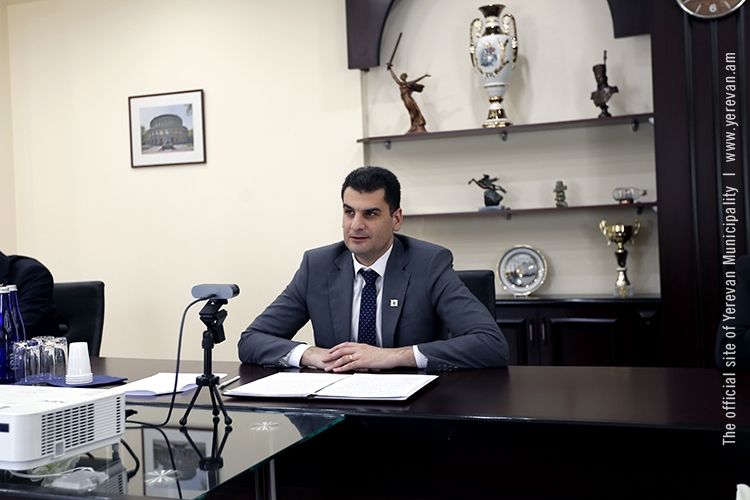
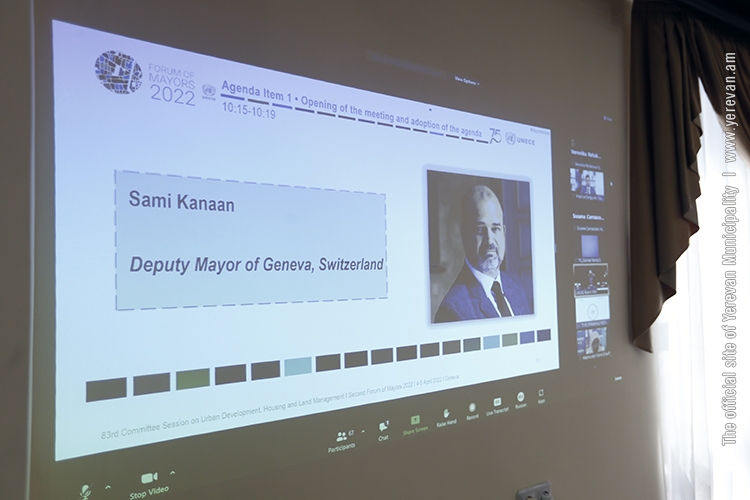
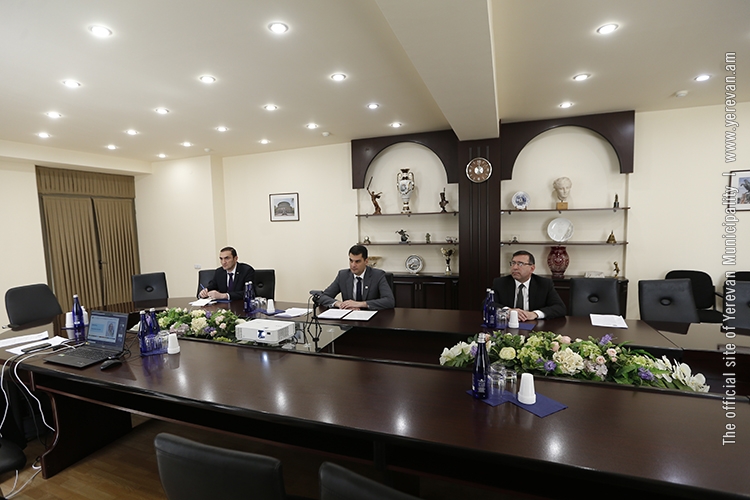
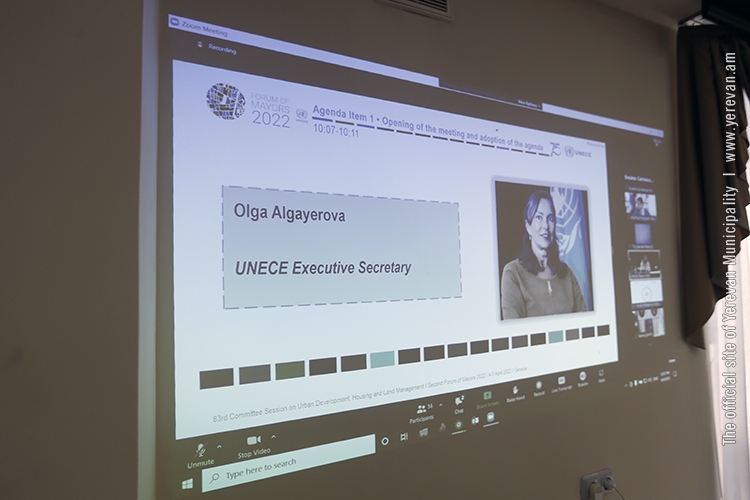
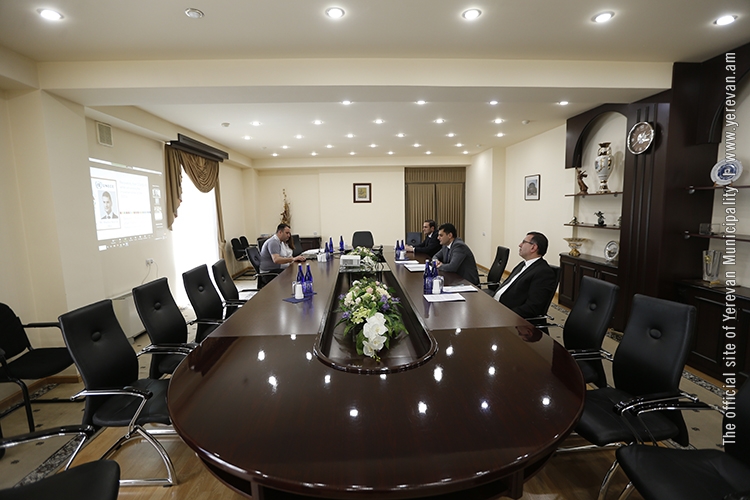
Yerevan Mayor Hrachya Sargsyan participated online in the Forum of Mayors-2022 held by the initiative of the UNO on April 4-5. During the video meeting nearly 50 mayors from 33 countries presented their approaches and programs related to urban development and settlement of rooted problems.. It was mentioned that the UNO is going to increase its efforts to be put into reaching common goals and elimination of COVID-19 consequences. Particular attention was attached to more active and direct involvement of the bodies of local self-governance on various international levels with the goal of overcoming “Sustainable development Challenges” of cities. In his speech Yerevan Mayor referred to urban transport reforms and sustainable development of the road network.
Excellences, dear colleagues, ladies and gentlemen,
It is my honour and distinct pleasure to attend the Forum of Mayors this year and address you today.
We meet when the world continues its fight against an unprecedented humanitarian and socio-economic crisis caused by COVID-19 pandemic, which has affected every nation’s health and livelihoods - with the most vulnerable suffering the most. Deliberations in the framework of the Forum of Mayors offers a good opportunity to reflect upon the achievements so far and to thoroughly discuss the existing challenges and our collective efforts aimed at shaping the ways to getting back on track towards the implementation of the sustainable development goals. In this regard, the theme of the forum this year: “Recovering from COVID-19 while advancing the implementation of the SDGs” could not be more timely and relevant.
“Ladies and Gentlemen,
In leading the effective post-COVID recovery and building back better, while ensuring that no one is left behind, the 2030 Agenda remains as relevant as ever. Armenia is committed to pursuing the goals specified by the 2030 Agenda, and the Government has launched efforts to include the SDGs in Armenia’s sectoral reforms, as well as nationalize and localize them in national strategies and policy papers. The municipality of Yerevan has implemented a wide range of reforms to achieve sustainable development goal 11, thus contributing to Armenia’s implementation of the 2030 Agenda. This includes a series of complex environmental, health, safety-related efforts, aimed at making the city sustainable, inclusive, secure and universally accessible.
The capital city of Armenia Yerevan is center of many economic, educational, and social activities. Having a territory of 227 square kilometers, it is a home to more than 1.2 million inhabitants, which constitutes the 34 percent of the population of Armenia. In addition, based on the steep upsurge in the past decade in the citizens' income and purchasing power as well as the development of commercial activities, there has been a significant increase in private car ownership and housing development in the city. This has led to intensified congestions, road safety and air pollution problems in our city, as well as parking and public transport deficiencies. Moreover, the effect of COVID-19 pandemic on the decrease of the public transport ridership and shifting of many citizens to private cars, has not yet been reversed completely.
In order to tackle all of the above-mentioned problems, the concept of sustainable urban transport development in our city is pursued through various strategic policies and projects. There are different fields involved in this matter, such as urban development, road construction, public transportation, and traffic management. Any policy and strategy developed and implemented in these fields must be in compliance with environmental and human health protection requirements.
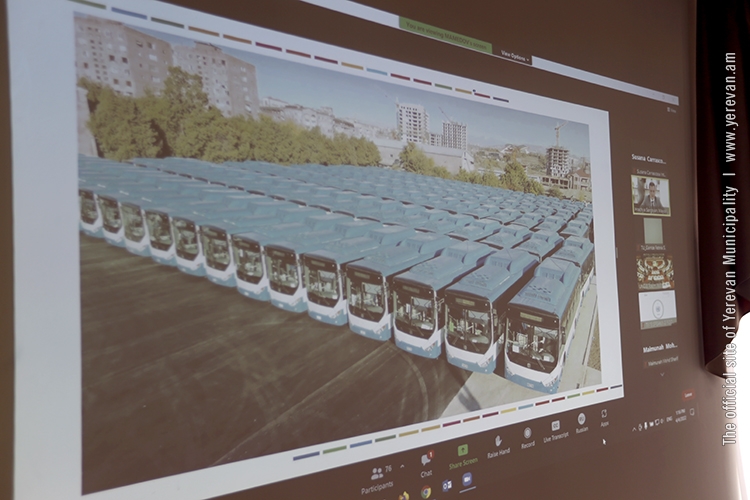
A sustainable transportation system should ensure efficient use of scarce resources, and in case of Yerevan the roads, are considered to be one of the most important aspects. In this regard, increasing the attractiveness, reliability, and efficiency of public transport has become an essential priority for the Municipality of Yerevan in the recent years and it is being pursued through various projects. As fewer people use personal vehicles, the lower is the level of traffic congestion and demand for new roadways. The city's vision is to provide the best possible public transportation system for our citizens that is reliable, clean and comfortable so that it can be more attractive compared to the private cars for the majority of citizens. Some of the activities in this sphere include purchasing more than 200 new CNG buses and minibuses with plans to renew the trolley bus network through the in-motion charging electric trolleybuses, dedicating priority lanes to public transport, and the introduction of an integrated electronic ticketing system.
A sustainable transportation system also requires provision of a public transit system that provides good connections with the primary activity areas. In this respect, the project for development of new public transport network based on different bus sizes such as articulated 18-meter buses for the core routes down to minibuses for the feeder and local routes has been worked on during the past year in collaboration with international and local specialists. Furthermore, the construction of new bus depots and a new control center has also started to ensure the serviceability and efficient use of the fleet.
One of the most critical and explicit aspects of sustainable urban transportation is the air pollution problem. In addition to the strategic policies and projects of shifting the priority choice of the citizens to the public transport, the city of Yerevan has also started various projects to improve the mobility, management, and safety of the traffic flows across the city.
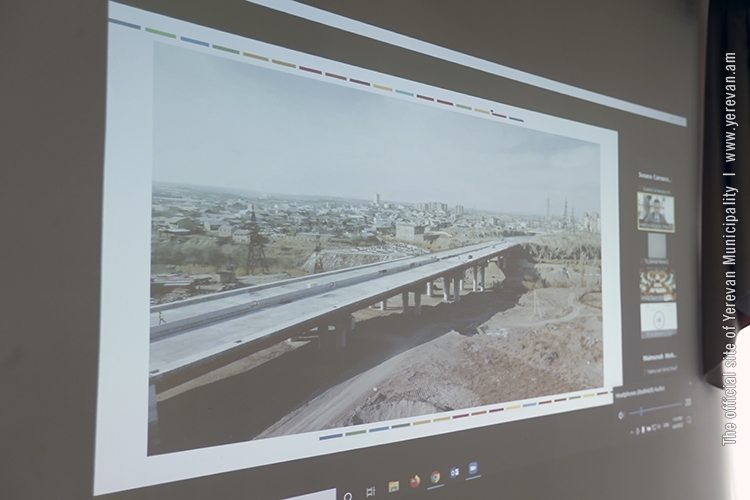
To accomplish better mobility and flow around the city, various road, highway, and bridge construction projects have been implemented in recent years. One of these projects, which is at its final phase, is the construction of the Yerevan belt highway that aims to prevent the interstate transit flows from entering the city.
In the sphere of traffic management, the city has already started the construction of its new traffic control center to manage the traffic flows more efficiently, reduce the response time of the road authorities and emergency services, and enforce the rules and regulations more effectively. In addition, there are currently undergoing studies conducted by our specialists to implement intelligent traffic control systems and adaptive traffic lights to reduce congestion and ultimately lower air pollution.
Furthermore, since personal vehicles are responsible for most of the air pollutants in the city of Yerevan, in collaboration with international donors, the municipality has acquired new and modern air quality assessment sensors, which will be used in various stations around the city to have a brighter/clearer picture and evaluation of the toxic gas and fine particles emissions, and to execute controlling measure if necessary.
Finally, in terms of having safer roads for both the drivers and pedestrians, we have executed a significant number of street lighting projects in the past years with more energy-efficient LED lighting fixtures which we believe, besides the tremendous cost reduction, will ultimately reduce the carbon footprint and enhance the sustainability for the city as well. Also, more than 150 pedestrian crossings around the city have been equipped with push-button traffic lights and proper lighting, leading to a significant decrease in pedestrian mortality rates.
Thus, not only having a sustainable transportation system for the city of Yerevan is very important, but it has been embedded in every policy and decision that we make these days. Since we believe that access to affordable, efficient, and reliable transportation for everyone is a key to improved health, education, and social empowerment of our citizens and our future generations. A sustainable transportation system may also work as a catalyst in the development process. A city with a sustainable transport system can easily attract new businesses and other activities. Hence, the benefits of having a sustainable transportation system are not limited to mitigating traffic congestion and improving air quality only, but it also helps to reduce poverty and brings economic prosperity to the cities.
Thank you”
Approximately 400 participants joined the Forum.
Photo gallery